Perilous seas
Fatima Hasnain (Beacon House School System Bahawalpur)
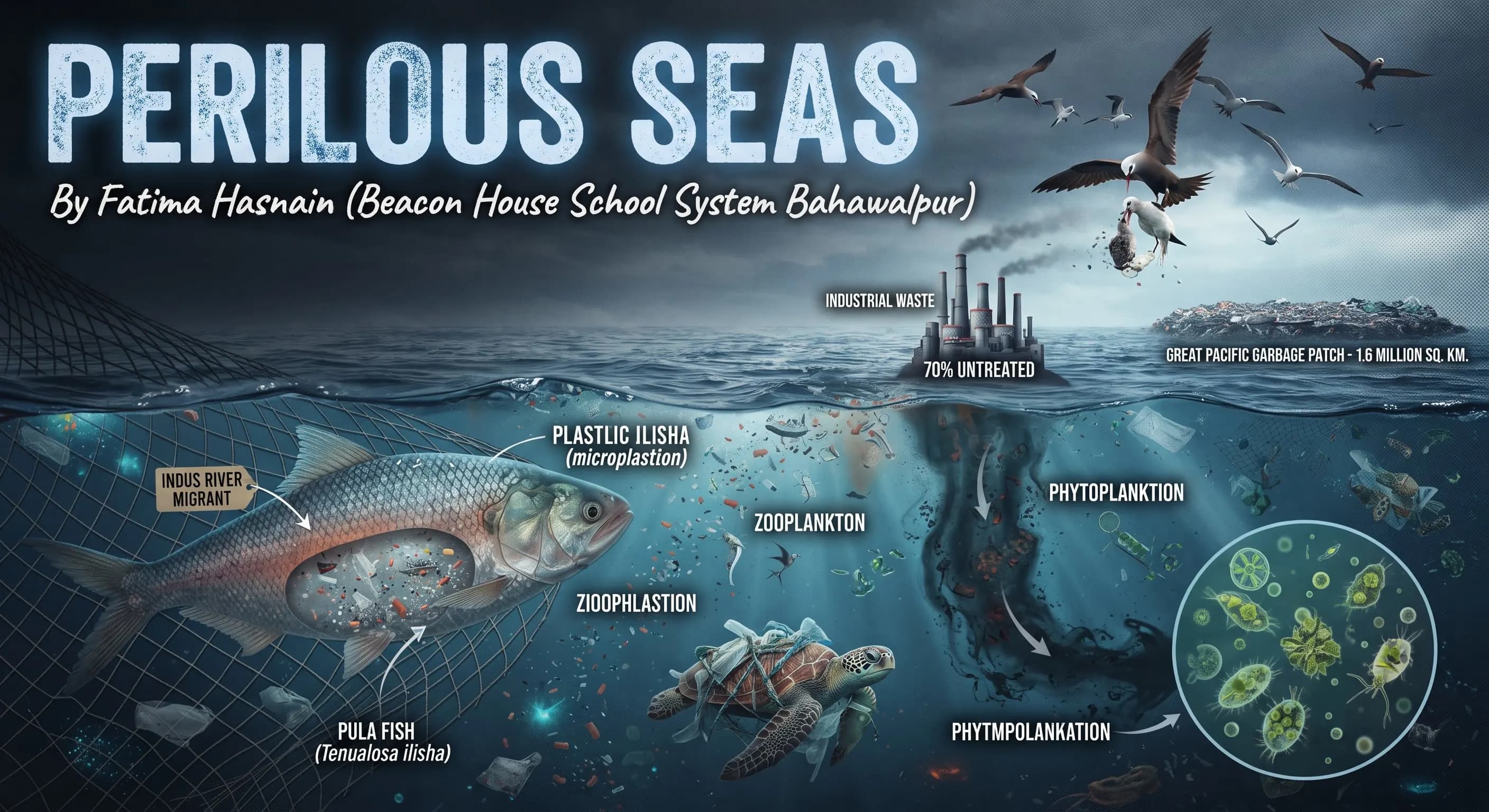
Covering more than 70% of the Earth's surface, the oceans are the main guarantors of our survival and ecological balance. However, due to industrial development, excessive use of plastic and chemical pollution, these great water bodies are facing a serious environmental crisis. According to an estimate, about 11 million metric tons of plastic are thrown into the oceans every year. A prominent example is the Great Pacific Garbage Patch, a large area of floating garbage between California and Hawaii. It is spread over about 1.6 million square kilometers, twice the area of Pakistan.
Scientific evidence from the University of Exeter and the World Wide Fund for Nature (WWF) shows that seabirds, and many fish, often ingest plastic as food, clogging their intestines and dying. In addition, the sun's rays break down plastic fragments into microplastics smaller than 5 mm. These particles are eaten by small marine insects (Zooplankton), and thus these pollutants eventually enter the human food chain through fish.
A clear example of marine degradation at the local level is the crisis of the famous "pula fish" of the Indus River. This migratory fish, which migrates from the Arabian Sea to the Indus River to breed, was abundantly available in the past and an important part of the local economy. But now the gradual reduction in water flow has restricted its movement paths.
Dr. Wazir Ali Baloch, professor of Sindh University, says that along with the shortage of water in the river, the use of fine nets in the Indus Delta is harming the young fish. As a result, while an important marine life is becoming rare, the local fishermen's economy and culture are also being damaged. According to NASA research, microscopic plants on the surface of the ocean, called "phytoplankton", produce 50 to 80 percent of the Earth's oxygen. These plants are also the base of the marine life's food chain. However, due to the increase in water temperature due to ocean pollution and global warming, their numbers are having a negative impact, which can affect not only the food of fish but also the oxygen system of the planet. Industrial waste has a major role in affecting marine life. According to World Bank reports, about 70% of chemical water coming out of factories in developing countries is discharged into rivers and seas without any treatment. Substances like mercury and lead in it not only affect the chemical composition of water but also cause damage to the reproduction of marine creatures.
There is a strong need to adopt practical measures at the individual and collective level to deal with these problems facing the marine environment. The impact of these threats can be limited by reducing single-use plastic, scientific disposal of industrial waste, and protecting coastal areas. The improvement of the marine system itself is important for human health and ecological balance.