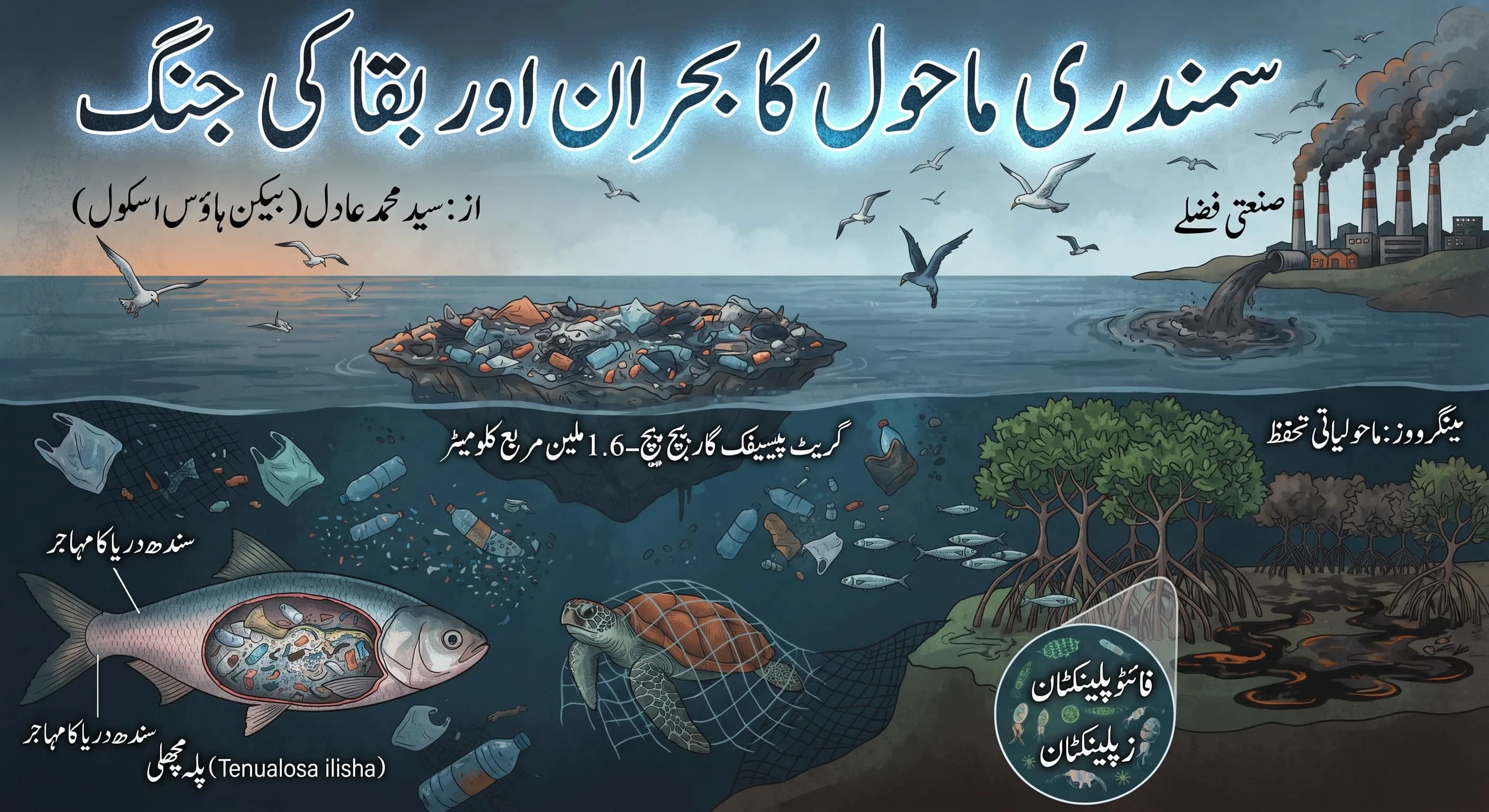
The crisis of the marine environment and the battle for survival
(Syed Muhammad Adil. Beacon House School)
Half utilization is causing damage to these forests. Coastal and marine organisms are interconnected. Plants and algae in the ocean provide food for small organisms, then larger fish, birds, and other organisms eat them; Thus all living things are interdependent. An increase or decrease in the number of a single organism can affect the entire marine environment.
The Indus Delta in Pakistan is a perfect example of this relationship. Mangrove forests here provide habitat and breeding ground for fish, shrimps and crabs. These forests also protect coastal areas from floods, hurricanes and soil erosion, but the loss of fresh water, pollution and overexploitation of natural resources is taking a toll on these forests.
Also, the pula fish is an important example of this ecological relationship. This fish comes from the sea to the Indus River to lay its eggs, but due to lack of water in the river and illegal hunting, the population of Pula fish has been severely affected. It shows that rivers, deltas, seas, fish and fishermen are all deeply connected to each other.
To protect this precious environment, we must conserve mangroves, stop poaching and avoid overfishing. At the same time, it is very important to reduce marine pollution and involve local fishermen in decisions.
Finally, protection of coastal and marine environments is important for both marine life and humans alike. Only through clean water and a safe natural environment can we preserve our marine resources for future generations.