Report : Umm Albanian Shah
Congregation: 8th
Date: 10 September 2026
Oceans and seas are an important part of our land; they are not only home to various aquatic animals but also have numerous benefits for humans; however, today these natural reserves are facing many dangerous problems.
Oceans are very important for our land. They cover more than 70% of the earth and play an important role in keeping the world's weather better. Oceans provide us with oxygen, food, and habitat for many marine animals. Small marine plants called phytoplankton make more than half of the oxygen we need. Oceans also balance the temperature of the earth. They have many animals ranging from small fish to large whales, so it is very important for the oceans to be healthy for life on earth.
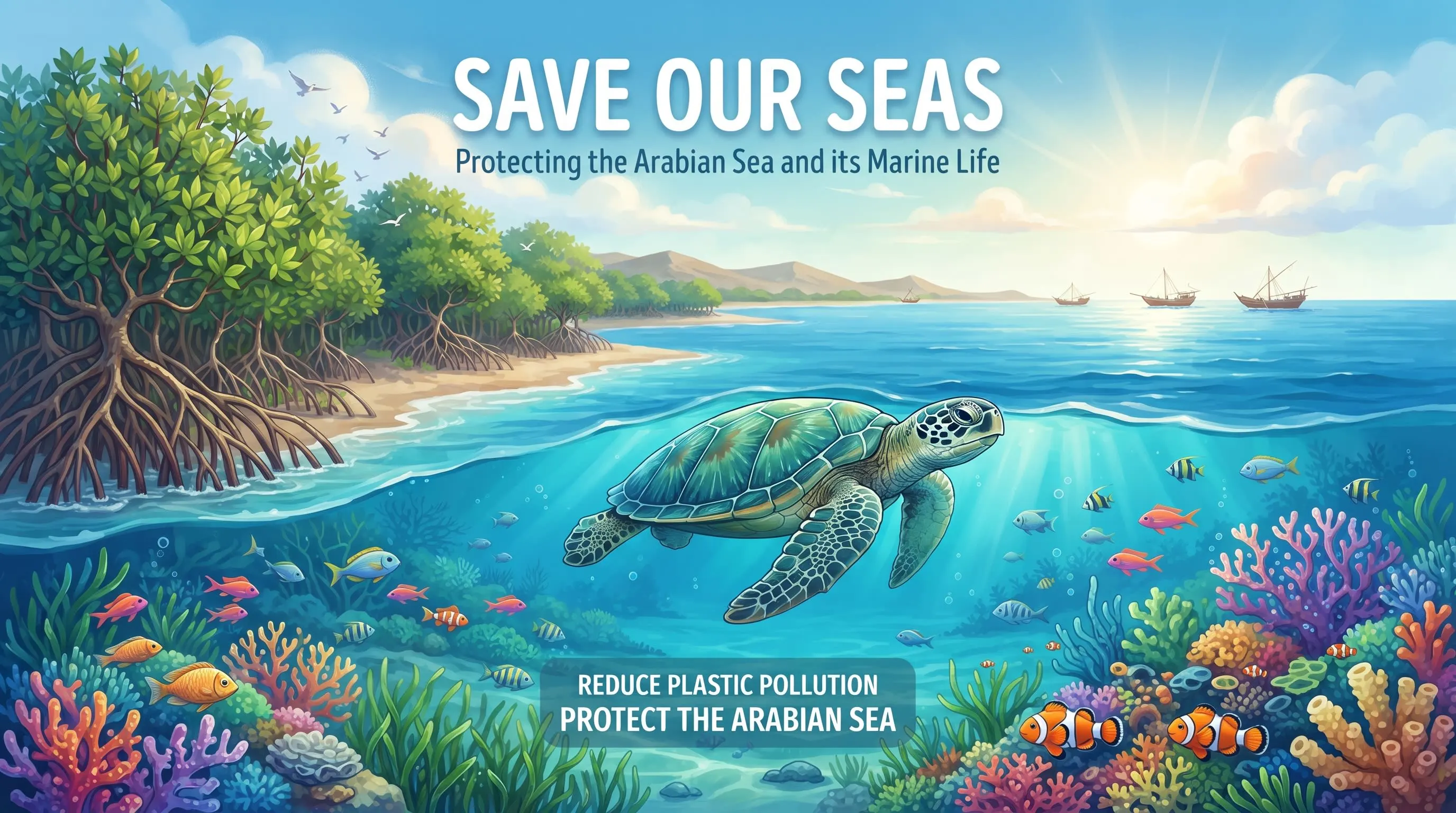
Oceans near Pakistan are facing many problems due to pollution, rising sea levels and overfishing. Factory wastewater, harmful chemicals and plastics are dumped into the sea. This pollution harms fish, turtles and other marine animals. Climate change is increasing sea levels, which can cause floods in coastal areas and affect farmland. Increased fishing is also reducing marine life. If we want to keep the oceans clean and safe, we must reduce the use of plastic, not throw garbage into the ocean, and protect marine animals.
We need to root out pollution to protect our oceans
to be prevented and nature's
Respect is the easiest way. The easiest way is to take frequent bags and bottles of water and reduce the use of plastic. It is also important that garbage never gets into our waterways. At home we can save water so that dirty sewage does not go into the sea, and never pour chemicals or oil into the drain. When we go to the beach, always pick up our garbage and do not disturb the sea animals. Finally, supporting local efforts to plant mangrove trees along the coast creates a natural shield that purifies water
and protects the earth from the harsh waves
Important research articles and scientific reports indicate that Pakistan's approximately 1,050 km coastal area along the Arabian Sea faces a number of serious threats, including environmental pollution, climate change and security issues. These problems are not only damaging the marine ecosystem but also affecting the lives of millions of people living in the coastal areas of Sindh and Balochistan.
According to the Government of Pakistan, about 3.3 million tonnes of plastic waste is generated in the country every year. Most of this waste is not disposed of properly, which makes it harmful to the environment and the oceans. The issue was also identified on 18 September 2025, according to the Press Information Department of the Government of Pakistan. According to a report by the United Nations Environment Programme (UNEP), Pakistan generated about 3.9 million tonnes of plastic waste in 2020, of which more than 65% was not disposed of properly. This shows that plastic pollution is a major problem for the oceans and the environment.
This report shows that Pakistan's oceans are facing threats such as plastic and toxic pollution, rising sea levels and overfishing. These threats are harming marine animals, increasing the risk of floods in coastal areas and also affecting people's lives and livelihoods.
To reduce these problems, we must reduce the use of plastics and not throw garbage into the sea; industrial waste from factories must be thoroughly cleaned before being dumped into the sea; Illegal fishing must also be prevented so that marine life can be preserved. At the same time, it is important to protect coastal areas and mangrove forests, as they help protect coastal areas from floods and sea waves. If the government and the public take these steps together, we can keep our oceans clean, safe and healthy.