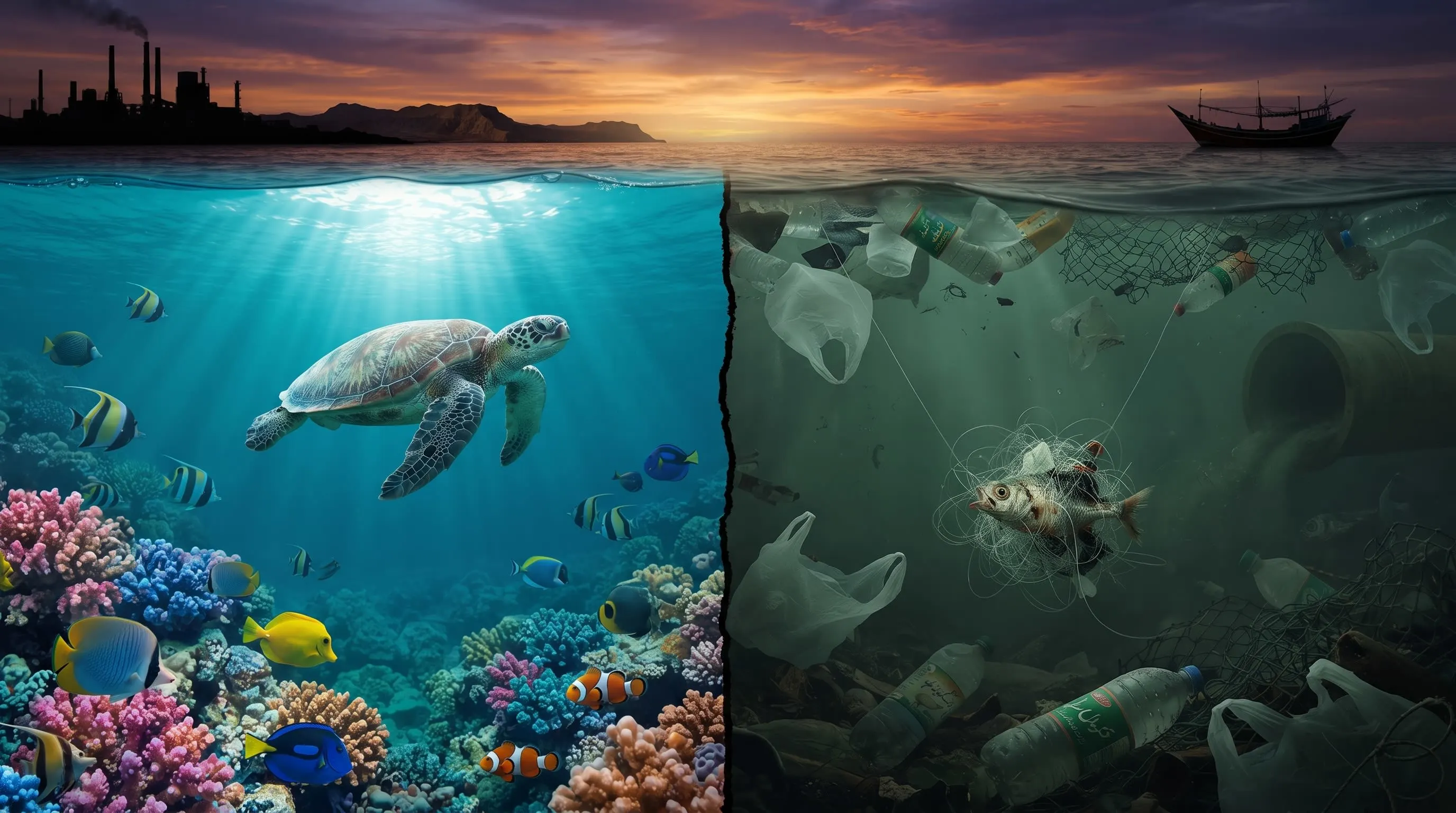
About 70% of the Earth's surface is covered by oceans, which are the most important pillar of the planet's ecosystem. Oceans act as Earth's "lungs," as they absorb carbon dioxide from the atmosphere and provide 50 to 75 percent of the oxygen for humans and other living things. Its lavas, rain systems and seasons are also moderated by the oceans, from which water evaporates and provides 40 percent of the land's fresh water. Oceans contribute $1.5 trillion annually to the global economy and provide food and employment for 40 percent of the world's population. Marine life is facing serious threats due to human activities and pollution. According to the United Nations, 80 percent of marine pollution is caused by land-based sources, including toxic industrial waste, sewage and plastic waste. Millions of tons of plastic enter the ocean and destroy the digestive systems of aquatic animals, especially fish and turtles. Moreover, the excessive absorption of carbon dioxide is increasing the acidification of the water (Ocean Acidification), which is a major threat to the survival of coral reefs and oyster creatures. Pakistan's coastal problems and marine pollution Pakistan's 1050 km long coastline, where more than 4.5 million people are employed in fishing, is suffering from a serious pollution crisis. Most of the toxic chemicals and untreated sewage from factories are discharged into the sea. In addition, oil spills from ships, and ship accidents are adversely affecting coastal forests (mangroves), fish and rare turtle species. The loss is further aggravated by the lack of timely implementation of international laws and local protective measures. Importance of Conservation Actions and World Day To save oceans and marine life, "World Oceans Day" is celebrated on June 8 every year to create public awareness of its importance. To maintain marine life and ecological balance, it is important to ban plastic use and littering on beaches, filter industrial waste before dumping it into the sea, and ensure immediate measures to deal with oil spills. These measures will not only protect the aquatic life but also preserve the economic and natural heritage for future generations.
Class 1-3Class 4-6Class 7-10
The last breath of the sea
Mahnoor Malik - Beaconhouse School System, Main Campus - Bahawalpur
September 23, 202646 viewsListen
Author
Mahnoor Malik - Beaconhouse School System, Main Campus - Bahawalpur
Mah Noor Malik belongs to Bahawalpur. She is a grade 8 student. The Beaconhouse Schools system is located on the main campus.